Model history: years and generations
The 2 Series arrived for the 2014 model year as the F22 coupe and F23 convertible, replacing the 1 Series coupe. These are true rear-drive cars on the same platform family as the F30 3 Series.
 0049 (0)89 2000 791 00
 Mo - Fr 8:00am - 8:00pm
USCar Trader import service
Choose a specific vehicle. Where data is available, its detail page shows the import cost calculation. We assess any possible duty benefit with you before purchase.
Important: A 0% EU import-duty rate may be available for a vehicle covered by Regulation (EU) 2026/1455 that has US origin and is imported directly into the EU. CETA may apply to a vehicle with preferential Canadian origin. Whether the requirements are met is assessed for the individual case. Please contact us before purchase; we review the possible duty benefit and provide non-binding support through the process. Import VAT and other costs are assessed separately.
CarHub · BMW
The BMW 2 Series is one of the last genuinely compact rear-wheel-drive coupes still built by a mainstream premium brand, and that is exactly why it draws attention from European buyers who go looking on the American used market.
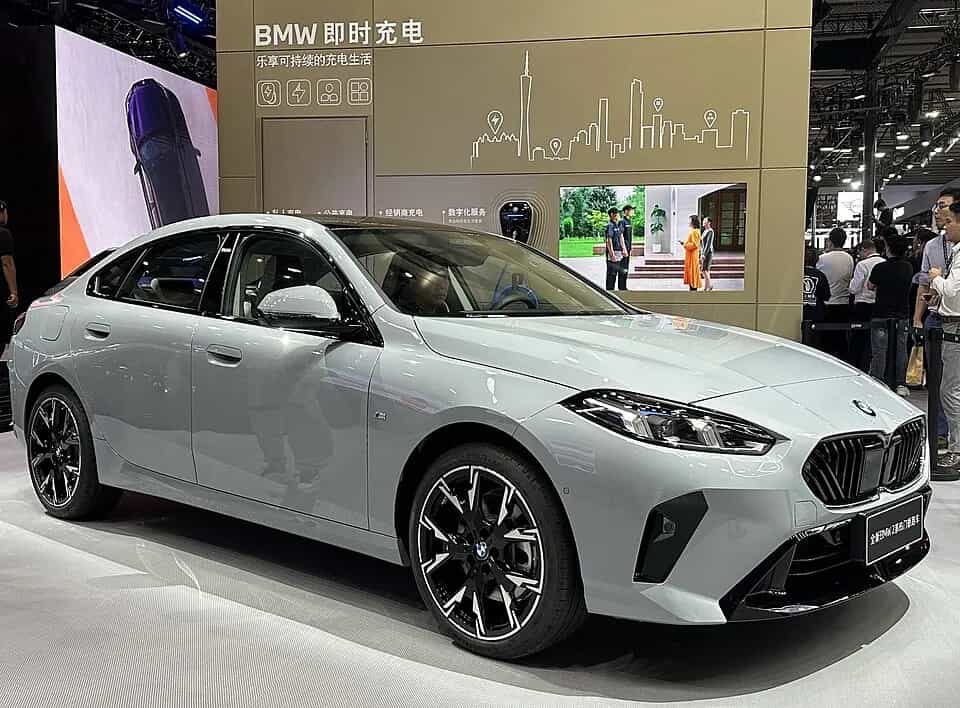
Model profile
The 2 Series arrived for the 2014 model year as the F22 coupe and F23 convertible, replacing the 1 Series coupe. These are true rear-drive cars on the same platform family as the F30 3 Series.
Powertrain and equipment
The core US engines are BMW's turbocharged four and six. Early 228i cars used the N20 2.0-litre turbo four (around 240 hp); from roughly 2017 the B48 2.0 four powered the 230i with a similar output.
In North America the 2 Series appears as a two-door coupe, a soft-top convertible (F23 generation) and the four-door Gran Coupe.
Vehicle selection
Supply is healthy. F22/F23 coupes and convertibles from 2014–2021 turn up regularly, typically with moderate annual mileage because many are second cars. G42 coupes from 2022 onward are appearing in growing numbers as first leases end. Southern and western states offer the rust-free cars worth targeting; salt-belt examples need closer scrutiny.
Vehicle data
| Body styles | Detail (US-market, generation-dependent): 2-door coupe, convertible (F23), 4-door Gran Coupe (F44) |
|---|---|
| Length (coupe) | Detail (US-market, generation-dependent): approx. 4,430–4,540 mm |
| Wheelbase | Detail (US-market, generation-dependent): approx. 2,690–2,740 mm |
| Kerb weight | Detail (US-market, generation-dependent): approx. 1,450–1,700 kg |
| Seating | Detail (US-market, generation-dependent): 4 (2+2) |
| Layout | Detail (US-market, generation-dependent): RWD or xDrive AWD (F44 Gran Coupe: FWD/AWD) |
|---|---|
| Petrol four | Detail (US-market, generation-dependent): N20 / B48 2.0 turbo, ~240 hp (228i/230i) |
| Petrol six | Detail (US-market, generation-dependent): N55 / B58 3.0 turbo, ~320–382 hp (M235i/M240i) |
| Transmission | Detail (US-market, generation-dependent): ZF 8-speed automatic; optional 6-speed manual |
| 0–100 km/h | Detail (US-market, generation-dependent): ~4.3–5.8 s depending on engine |
| Fuel | Detail (US-market, generation-dependent): Premium unleaded (95+ RON equivalent) |
| Drive tyres | Detail (US-market, generation-dependent): Run-flat common on US cars |
| Generations | Detail (US-market, generation-dependent): F22/F23 (2014–2021), F44 (2020+), G42 (2022+) |
|---|---|
| M models | Detail (US-market, generation-dependent): F87 M2 (N55/S55), G87 M2 (S58) |
Values are reproduced verbatim from the existing article table. The documents for the specific vehicle govern.
Pre-purchase review
BMW 2 Series reliability is broadly good for the class, but there are known BMW 2 Series common problems worth checking. The early N20 four had timing-chain concerns on high-mileage examples and can develop oil leaks from the valve-cover and oil-filter-housing gaskets. Both four and six-cylinder cars are prone to seeping oil-filter-housing and oil-pan gaskets over time.
Germany and Europe
US cars use a red combined rear brake-and-turn signal (or amber, depending on year) rather than the separate amber indicator required here, and they lack a rear fog lamp entirely.
Typical work for the individual approval includes fitting a rear fog lamp, correcting the rear turn-signal colour to amber, adjusting or replacing headlights for the European beam pattern, and converting or verifying the odometer/speedometer in km/h.
USCar Trader services
As a buyer based in Germany, you do not have to inspect the vehicle yourself in the United States or Canada. Within the agreed scope, USCar Trader can coordinate document review, a separately commissioned on-site inspection and purchase processing.
Covered inspection points are agreed in advance. An on-site inspection records condition at the appointment and is not a guarantee.
Next step: Before commissioning, USCar Trader and the customer agree which document, history, inspection and transaction checks suit the vehicle and are included in the service. This records what was actually checked.
Import process
USCar Trader coordinates these stages as your broker.
Questions and answers
Yes. Coupes, convertibles, Gran Coupes and M2s can all be imported and registered after individual approval; the drivetrain is well supported by German BMW specialists.
No, not automatically. A 0% EU import-duty rate may be available for a vehicle covered by Regulation (EU) 2026/1455 that has US origin and is imported directly into the EU. CETA may apply to a vehicle with preferential Canadian origin. Whether the requirements are met is assessed for the individual case. Please contact USCar Trader before purchase; we review the possible duty benefit and provide non-binding support. Import VAT and other costs are assessed separately.
Import VAT and other taxes or costs are assessed separately under the applicable rules and the circumstances of the individual case. A blanket answer for every vehicle would not be reliable.
The six-speed manual was offered on the M235i, M240i and M2. It is uncommon but does exist in US inventory and is a popular import target.
The straight-six cars — B58-powered M240i and the S55/S58 M2 — are the most in demand, valued for their performance and tuning potential.
Oil-filter-housing and valve-cover gasket leaks, cooling-system parts, and rod bearings on the S55 M2. A clean service record addresses most concerns.
From purchase to German plates, plan for roughly two to three months, driven mainly by shipping schedules and the TÜV appointment.
Yes. US cars are not fitted with one, and it must be added for German registration.
More vehicles